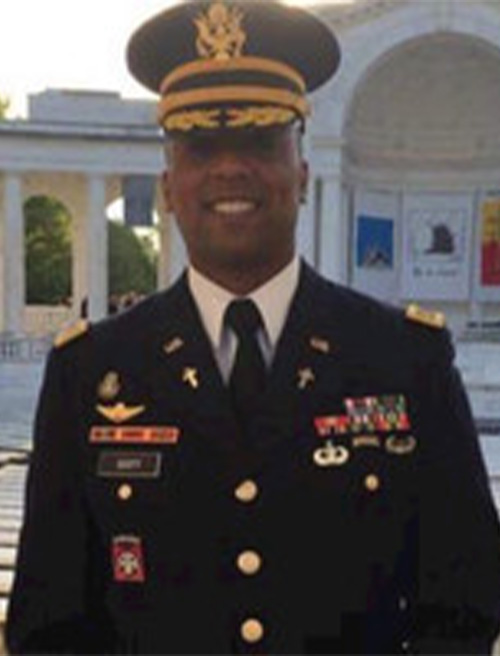
When he began his military career, Army Chaplain (LTC) John Scott (DMin ’20) didn’t intend to become a chaplain. He was initially commissioned as an armor officer in 1997 and served as a combat arms officer for 10 years. But at almost every turn, it was chaplains who helped him navigate life.
Scott first found Christ thanks to the chaplain at an ROTC summer training camp in 1996. A couple of years later, he was struggling to finish ranger school, a very intense two-month leadership development program. The regular weekly worship services and the chaplain who led them helped Scott persist and complete the program. In 2003, another chaplain baptized Scott, his wife, and their oldest daughter. It would take a while for his vocational path to shift, but
Scott knew he wanted to do what these chaplains had done for him: to help, support, and counsel service members and their families.
Eventually, Scott found his way to seminary and was recommissioned as an Army Chaplain. He has always pursued education and, after several years working as a chaplain, came to Wesley as part of the Military Chaplaincy Doctor of Ministry program. The robust scholarships for that program played a part in his choice, but Scott says that Wesley’s culture was equally attractive.
The program requires students to take 2 of the 10 required courses on campus, but Scott enjoyed the Wesley community so much that he chose to take 4 classes on-site. “The experience was just really genuine,” he says, citing Dr. Sathi Clarke’s course on interfaith relations and Dr. Douglas Powe’s work on community engagement as two specific Wesley encounters that have shaped his ministry.
These days, Chaplain Scott puts his Wesley degree to work as a chaplain in the National Capitol Region. He has become a regular supporter of the Military Chaplaincy DMin program,
hoping to help others have the same kind of genuine experience that he did.